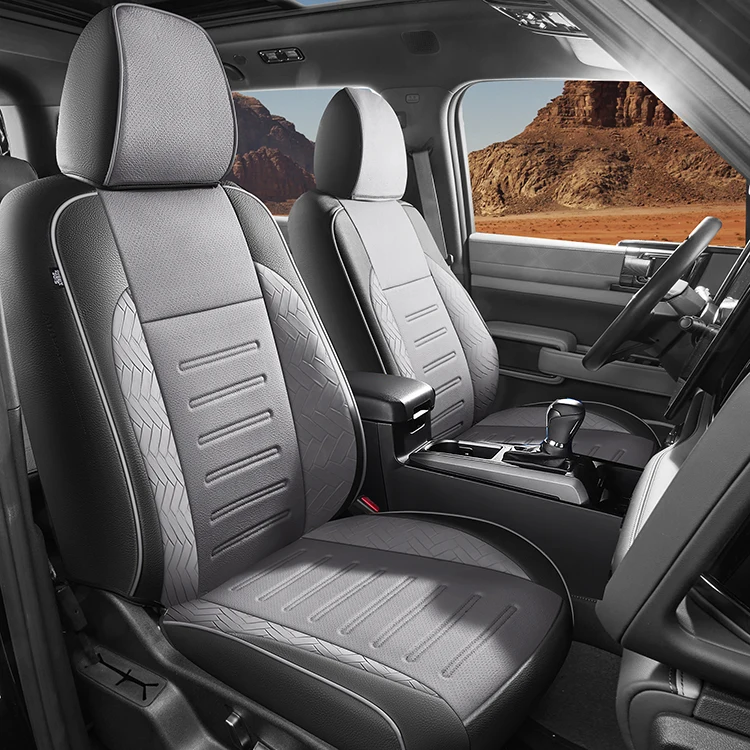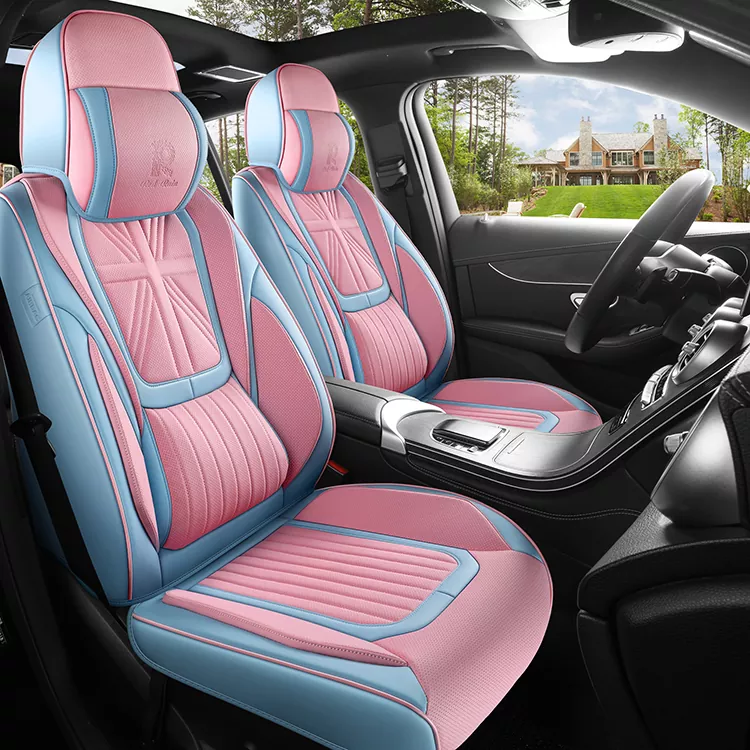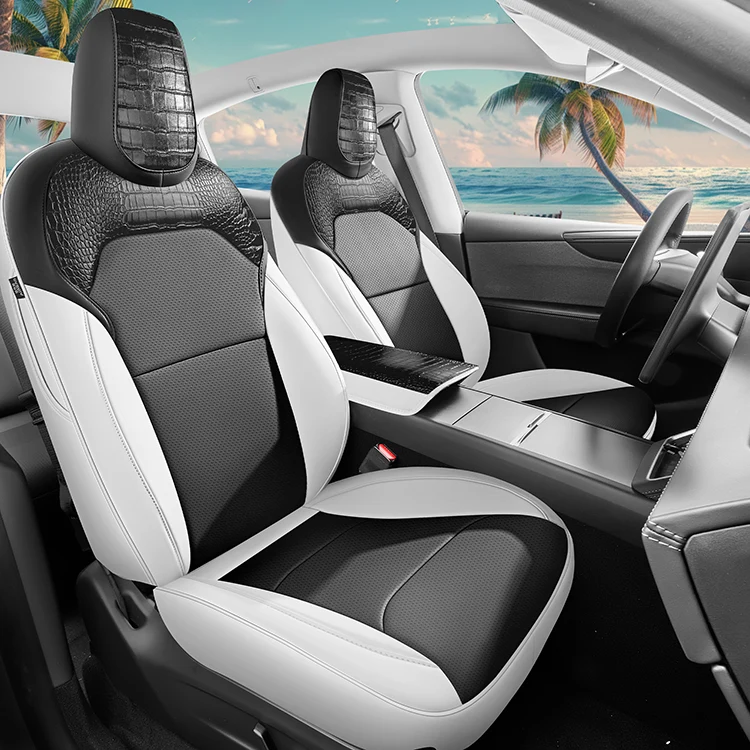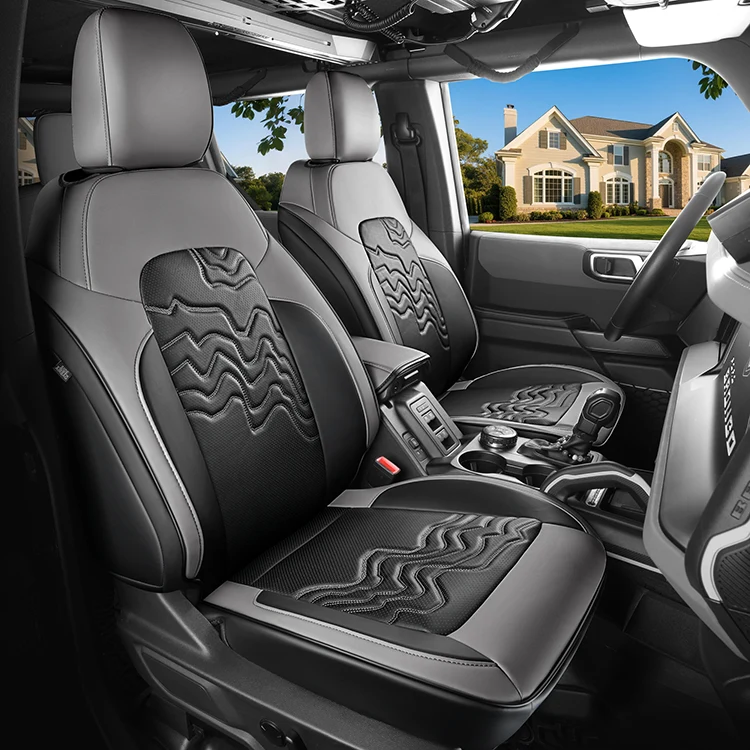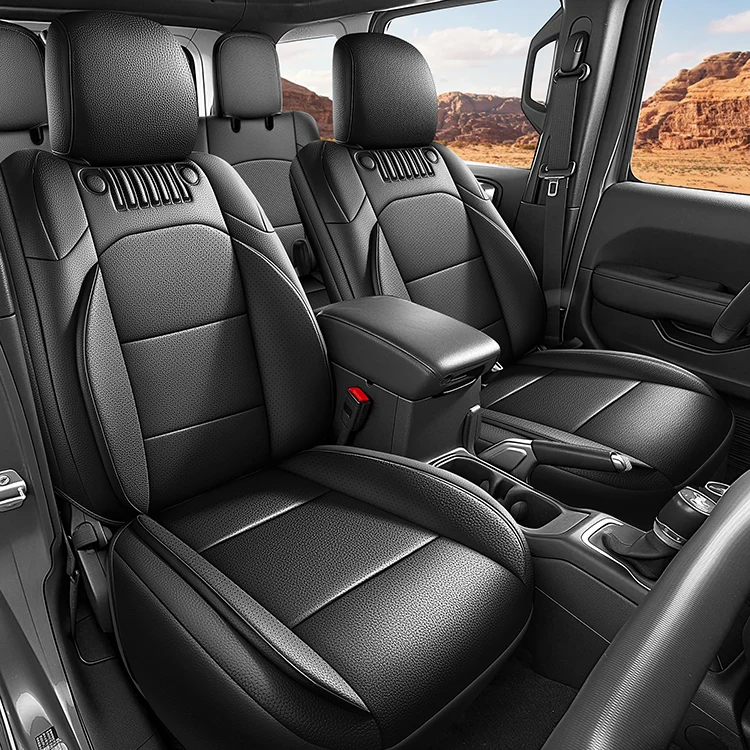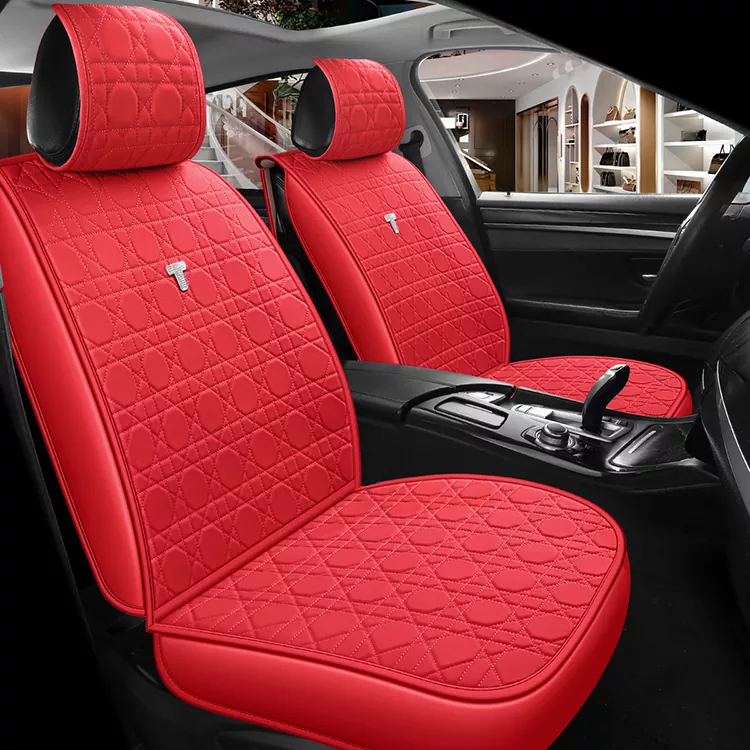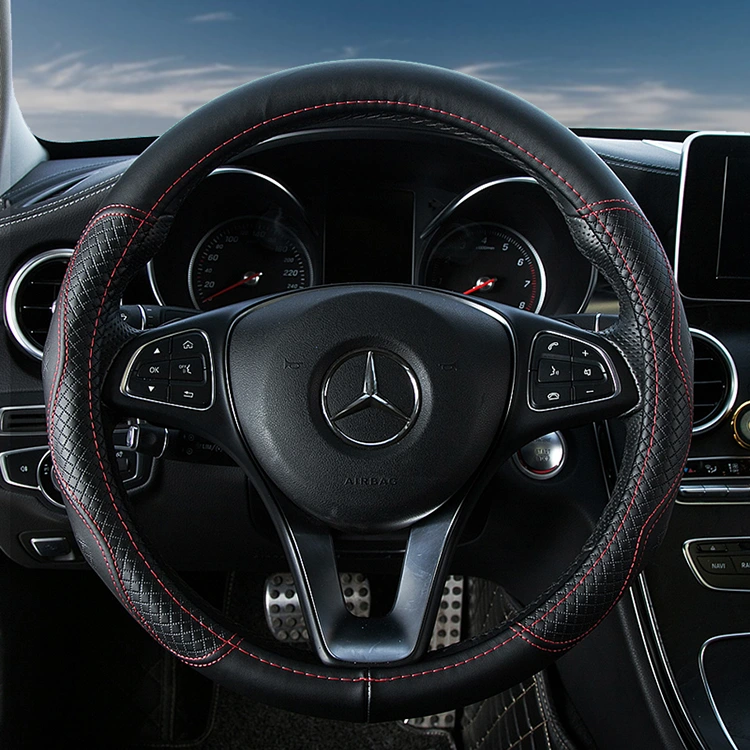
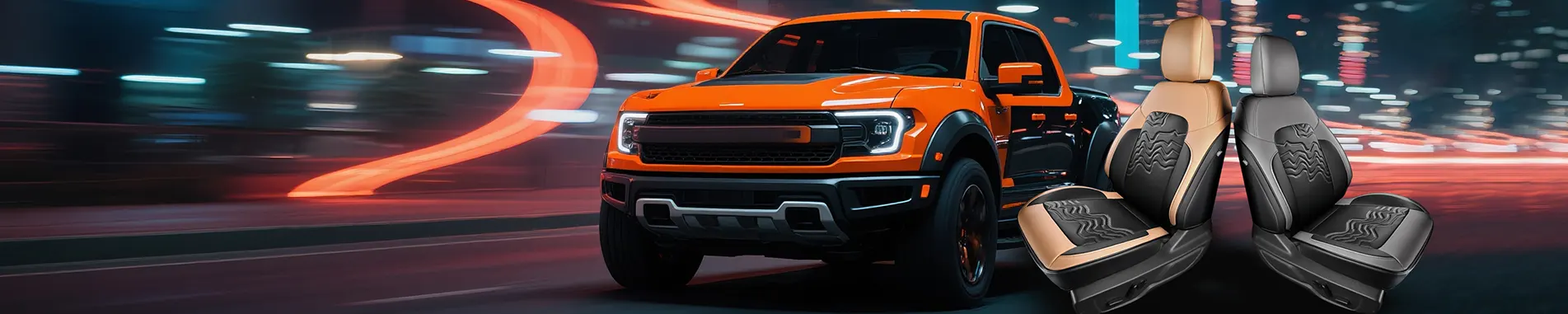
Hongyu develops Universal Integrated Car Seat Covers with Lumbar Support for compatible 5-seat passenger vehicles, combining a universal-fit structure, integrated lower-back cushioning, layered seat protection, and practical aftermarket customization options for automotive buyers.
Modern car seat covers are expected to do more than change the appearance of a vehicle interior. Drivers and automotive accessory buyers increasingly look for products that combine comfort, seat protection, compatibility, durability, and convenient installation. Universal Integrated Car Seat Covers with Lumbar Support are designed around these practical requirements by integrating a shaped lumbar cushioning area directly into the front-seat cover structure.
According to the product information provided by Hongyu, the covers use a five-layer construction that combines faux leather, high-density sponge, a support layer, non-woven fabric, and an anti-slip base. The product is intended to fit a broad range of compatible 5-seat passenger vehicles and uses adjustable straps, hooks, rear zipper sections, and dedicated construction around applicable side-airbag areas. Before purchasing, buyers should still confirm the actual seat dimensions, headrest configuration, split-bench design, armrest structure, and vehicle functions.
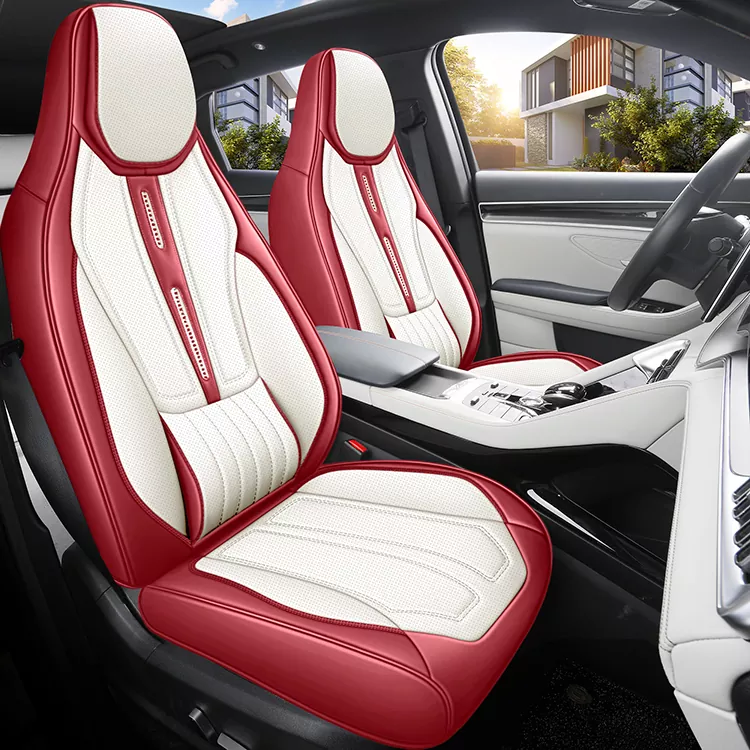
Table of Contents
- Why does integrated lumbar support matter in a car seat cover?
- What makes the five-layer construction practical?
- How does a universal-fit design improve product versatility?
- What are the key specifications buyers should review?
- What should buyers know about safety and vehicle compatibility?
- Why is rear-seat configuration important?
- How should the covers be installed and maintained?
- How can automotive buyers evaluate the right seat cover program?
- What customization opportunities are available?
- Frequently Asked Questions
Why does integrated lumbar support matter in a car seat cover?
A standard seat cover primarily adds a protective layer between the driver or passenger and the original upholstery. An integrated lumbar design adds another functional objective: supporting the lower-back area through the shape and cushioning built directly into the front-seat cover.
This is different from simply placing a separate lumbar pillow on top of a seat. A built-in structure can create a more integrated appearance while reducing the number of separate accessories inside the vehicle. For daily commuters and long-distance drivers, a shaped support zone can also make the seating surface feel more structured when compared with a flat cover.
For automotive retailers, this functional difference can help position Universal Integrated Car Seat Covers with Lumbar Support as more than a decorative accessory. The product combines several purchase drivers within one solution:
- Seat surface protection for daily use
- Additional cushioning between the occupant and original seat
- A shaped lower-back support area
- An upgraded interior appearance
- Broad application potential for compatible 5-seat vehicles
- Potential for color, branding, and packaging customization
The result is a product concept that addresses both functional and visual automotive interior needs.
What makes the five-layer construction practical?
Material structure has a direct influence on how a seat cover feels, wears, and stays positioned during normal driving. The Hongyu product uses a five-layer construction designed to combine surface appearance, cushioning, structural support, backing, and seat stability.
| Construction Layer | Main Function | Buyer Value |
|---|---|---|
| Faux Leather | Provides the visible outer surface | Supports a refined automotive interior appearance and routine cleaning |
| High-Density Sponge | Adds cushioning | Improves the feel of the seating surface |
| Support Layer | Helps maintain product structure | Supports the shaped design, including the lumbar area |
| Non-woven Fabric | Forms part of the internal backing structure | Contributes to the layered construction |
| Anti-slip Base | Helps improve contact stability | Supports more secure positioning on compatible seats |
A layered design should be evaluated as a complete system rather than by surface material alone. Buyers comparing automotive seat covers should consider thickness, stitching quality, backing performance, panel construction, attachment design, and how the product behaves after repeated entry, exit, and daily use.
The combination of layered padding and a shaped support area is one of the defining characteristics of this product category. It allows comfort-related features and upholstery protection to be incorporated into the same seat-cover assembly.
How does a universal-fit design improve product versatility?
Universal-fit products are designed for broader vehicle applications rather than being patterned around only one vehicle model. This can be useful for wholesalers, distributors, retailers, and aftermarket brands that want to manage a product range covering multiple compatible vehicles.
Hongyu lists fitment coverage of approximately 80% of global 5-seat passenger vehicles for this collection. However, “universal” does not mean that every vehicle will have identical compatibility. Actual fit should always be checked against the seat shape and interior configuration before purchase or bulk distribution.
Important compatibility factors include:
- Front-seat width and overall seat shape
- Headrest type and removal method
- Integrated or fixed armrests
- Rear split-bench configuration
- Center-console access requirements
- Seatbelt locations
- Child-seat clearance requirements
- Applicable side-airbag areas
- Heated or ventilated seat functions
For buyers, the main advantage is inventory flexibility. A well-designed universal product may reduce the need to stock a separate SKU for every vehicle model while still providing a practical fit for a broad compatible market.
What are the key specifications buyers should review?
Product specifications help automotive buyers compare fitment, construction, installation, and supply requirements before ordering. The following information summarizes the main characteristics associated with the Hongyu collection.
| Specification | Details |
|---|---|
| Product Type | Universal Integrated Car Seat Covers with Lumbar Support |
| Intended Application | Compatible 5-seat passenger vehicles |
| Fitment Coverage | Approximately 80% of global 5-seat passenger vehicles |
| Material Construction | Five layers: faux leather, high-density sponge, support layer, non-woven fabric, and anti-slip base |
| Lumbar Design | Integrated shaped cushioning area in the front-seat cover |
| Installation System | Straps, tucks, hooks, and rear zipper sections; no special tools required |
| Typical Installation Time | Approximately 40–60 minutes depending on vehicle configuration and installation experience |
| Rear Configuration | Separate panels designed for common split-bench layouts |
| Complete Set | 11 main cover components plus installation accessories |
| Standard Color Combinations | White & Red, Blue & Black, and Green & Gray |
| Customization | Color development, private-label branding, packaging, and selected OEM requirements |
These specifications should be used as a starting point for product selection. Importers and private-label buyers should confirm the final material, dimensions, color, packaging, and vehicle compatibility requirements for the specific order.
What should buyers know about safety and vehicle compatibility?
Seat covers should never interfere with essential vehicle functions. For vehicles with seat-mounted side airbags, the relevant cover design must use the intended airbag-compatible construction and dedicated stitching or release areas where applicable.
The cover should be installed according to the supplied instructions. Buyers should not cut, modify, or independently alter the designated airbag area after production. Vehicle-specific safety requirements may differ, so compatibility should be verified for the intended market and vehicle application.
Seatbelt access must also remain unobstructed. Buyers should additionally evaluate child-seat anchor access, rear-seat folding functions, center armrests, and other features that must remain usable after installation.
For heated or ventilated seats, compatibility depends on the original vehicle system and the selected cover construction. This should be confirmed before purchase rather than assumed based only on the universal-fit designation.
Why is rear-seat configuration important?
Front-seat design receives much of the attention because of the integrated lumbar support, but the rear section is equally important for product usability. Many modern passenger vehicles use split rear benches, fold-down seatbacks, center armrests, and different headrest arrangements.
The rear assembly for these Universal Integrated Car Seat Covers with Lumbar Support uses separate sections intended to accommodate common split-bench configurations while helping preserve access to applicable seat functions. The complete appearance is maintained through coordinated panels rather than a single oversized rear cover.
Before selecting a universal product for a specific sales market, buyers should identify the most common vehicle types in their customer base. A seat cover that works well for one rear-seat layout may not provide the same fit for another.
How should the covers be installed and maintained?
One advantage of a universal automotive seat-cover system is simplified installation. This design uses straps, hooks, tucks, and zipper sections, allowing installation without special tools or seat disassembly in normal applications.
- Remove or prepare the headrests as required by the vehicle and install the corresponding cover sections.
- Align the front backrest and seat-base covers with the original seat structure.
- Secure the attachment points using the supplied straps, anchors, hooks, or tucks.
- Install the rear sections according to the split-seat configuration.
- Confirm access to seatbelts, armrests, and applicable vehicle functions.
- Check that the cover remains properly positioned before regular driving.
For routine maintenance, the surface can generally be cleaned with a damp cloth or an appropriate leather-care product when suitable for the selected material. Harsh cleaning methods should be avoided unless approved for the product. Natural air drying helps maintain the condition of the cover after cleaning.
How can automotive buyers evaluate the right seat cover program?
When sourcing Universal Integrated Car Seat Covers with Lumbar Support, buyers should evaluate more than the appearance of the finished product. A successful wholesale or private-label program depends on fitment, market positioning, quality consistency, customization, and supply support.
A practical sourcing checklist includes:
- Target vehicle range: Identify the most important 5-seat vehicles in the intended market.
- Comfort positioning: Decide whether integrated lumbar cushioning is a key selling feature.
- Material expectations: Confirm surface texture, padding, backing, and cleaning requirements.
- Safety considerations: Review applicable airbag and seatbelt requirements.
- Color strategy: Select standard combinations or discuss market-specific color development.
- Branding: Determine whether private labels, logos, inserts, or customized packaging are required.
- Sample review: Confirm product details before moving to bulk production.
- Installation support: Consider whether guides, videos, or other retail materials are needed.
Hongyu supports product development, manufacturing, quality management, and international sales for automotive interior accessories. Its seat-cover programs can include customization based on customer drawings, samples, or specifications, allowing buyers to adapt selected products to their own market strategy.
What customization opportunities are available?
Customization can help automotive accessory companies avoid competing only on price. A product may be adapted through approved changes to color combinations, branding, packaging, and selected design requirements.
For example, a distributor may prefer a standard product structure with private-label packaging, while another buyer may require a specific color combination to match its existing automotive accessories collection. Depending on production requirements, the development process can include requirement confirmation, reference review, sample development, customer approval, production, and quality inspection.
This flexibility is particularly useful for brands that want to create a more recognizable product range around Universal Integrated Car Seat Covers with Lumbar Support while maintaining the practical advantages of a broader-fit product platform.
Frequently Asked Questions
What vehicles can Universal Integrated Car Seat Covers with Lumbar Support fit?
They are designed for a broad range of compatible 5-seat passenger vehicles. However, universal fit does not guarantee identical compatibility with every vehicle. Buyers should check seat dimensions, shape, headrests, armrests, rear-seat configuration, and other interior features before ordering.
Is the lumbar support built into the seat cover?
Yes. The front-seat design incorporates a shaped lumbar cushioning area directly into the cover rather than relying on a separate removable lumbar pillow.
Are the seat covers compatible with side airbags?
The product uses dedicated construction around applicable side-airbag areas. Installation should follow the supplied instructions, and the designated area should not be cut or modified. Buyers should verify compatibility with the intended vehicle and market requirements.
How long does installation usually take?
Typical installation takes approximately 40–60 minutes, although actual installation time depends on the vehicle seat configuration and the installer's experience.
Can the rear seats still be used normally?
The rear assembly is designed around common split-bench layouts with separate sections intended to preserve applicable seat access and functions. Actual compatibility depends on the specific vehicle configuration.
Can colors and branding be customized?
Yes. Standard two-tone combinations are available, while additional colors, private-label branding, packaging, and selected OEM requirements can be discussed according to production and material availability.
Are these covers suitable for heated or ventilated seats?
Compatibility depends on the original vehicle system and the final cover construction. Buyers should confirm the vehicle model and seat functions before purchasing or installing the product.
Choose a More Functional Automotive Interior Upgrade
Universal Integrated Car Seat Covers with Lumbar Support offer a practical combination of seat protection, layered cushioning, ergonomic support, visual customization, and broad compatibility for suitable 5-seat vehicles. For automotive wholesalers, retailers, importers, and private-label brands, selecting the right product starts with understanding the target vehicle range and the features customers value most.
Looking for a reliable automotive seat cover solution with customizable colors, branding, packaging, and OEM development support? Explore more details about Universal Integrated Car Seat Covers with Lumbar Support and learn more about Hongyu automotive seat cover solutions. Whether you need samples, product customization, or support for a new private-label program, contact us today to discuss your requirements and build a more competitive automotive interior product range.